


Bild ist im Hintergrund eingefügt – mit einer Höhe von 50vh – Dieser Text ist Transparent
Fresh from the oven. Automatically packed.
Automated bread packaging for retail bakeries with AI-based quality inspection
Freshly baked bread, physically demanding work and limited staff resources, while every store still needs to be reliably supplied. Retail bakeries face this challenge every day.
To address it, Bäckerei und Konditorei Treiber GmbH, based near Stuttgart, Germany, has taken a major step towards automation, with robomotion as its partner from the initial concept through to the running system. The result: As the bread leaves the oven, a compact robotic cell takes over the product-specific, hygienic packing into bakery baskets, including AI-based quality inspection. Automatically and without manual intervention.
Yet for many bakeries, automation still seems like a major step: too complex, too costly or simply not suited to the realities of a medium-sized business. The Treiber project demonstrates how automated bread packaging can work for retail bakeries, with a solution designed around the products, processes and available space of an established bakery operation.
Bakery / Retail bakery
Bäckerei und Konditorei Treiber GmbH
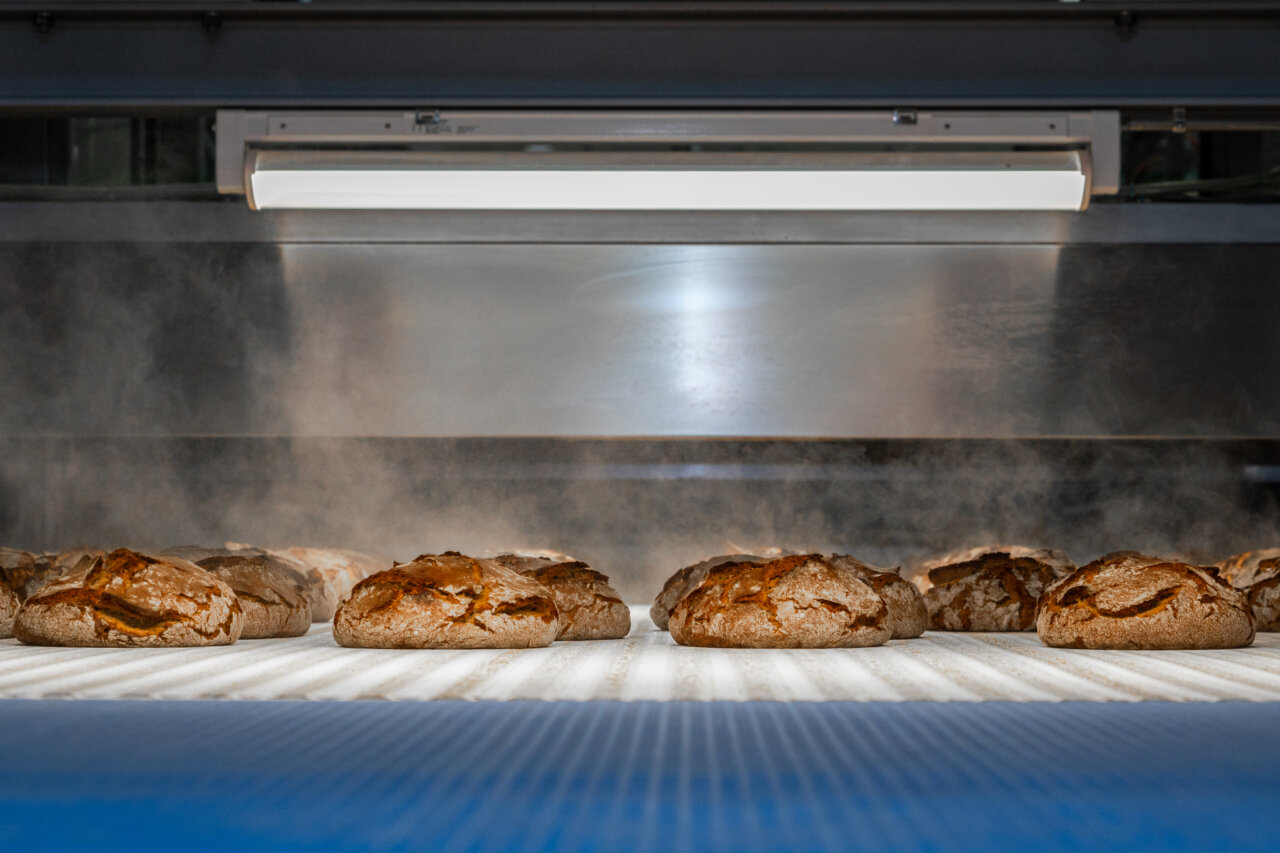
Fresh from the oven and ready for automated packing
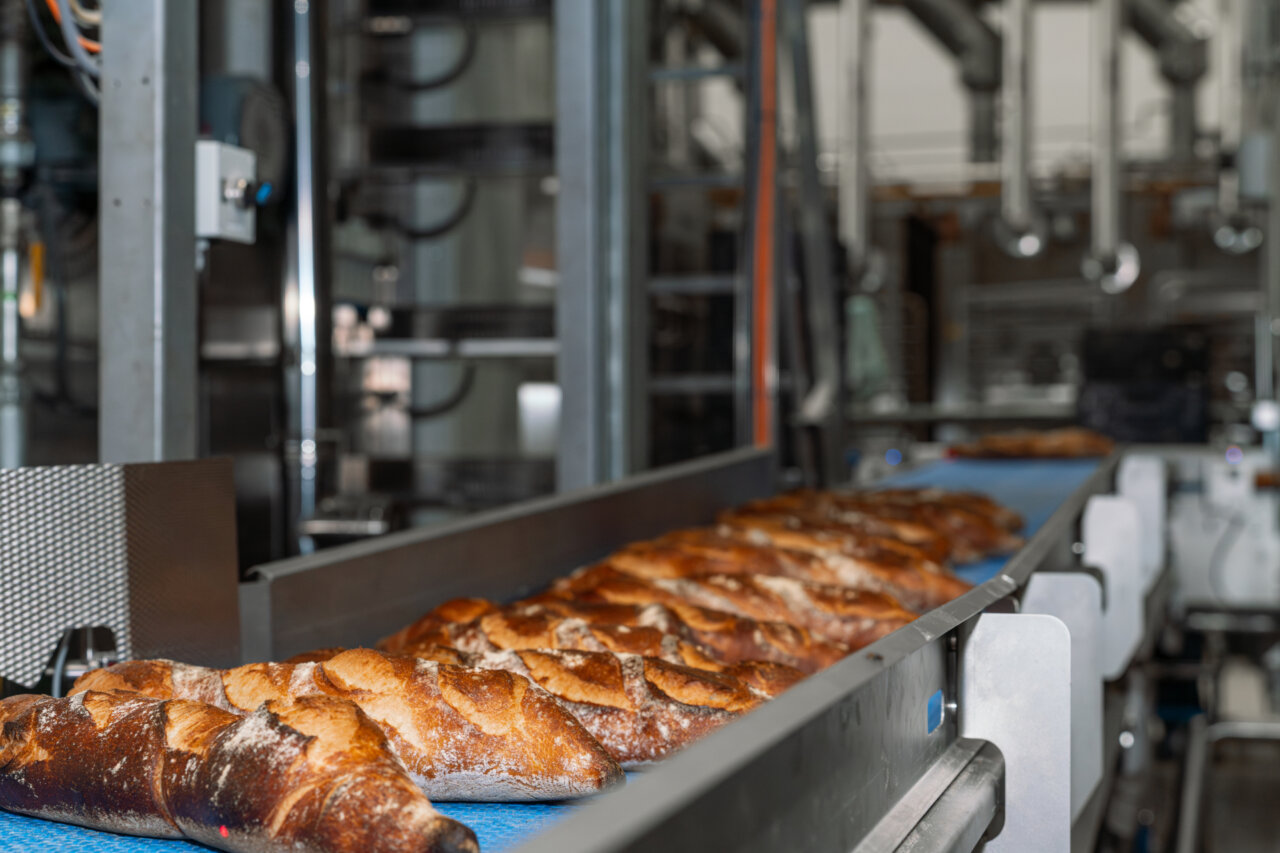
From the oven conveyor straight into automated packing
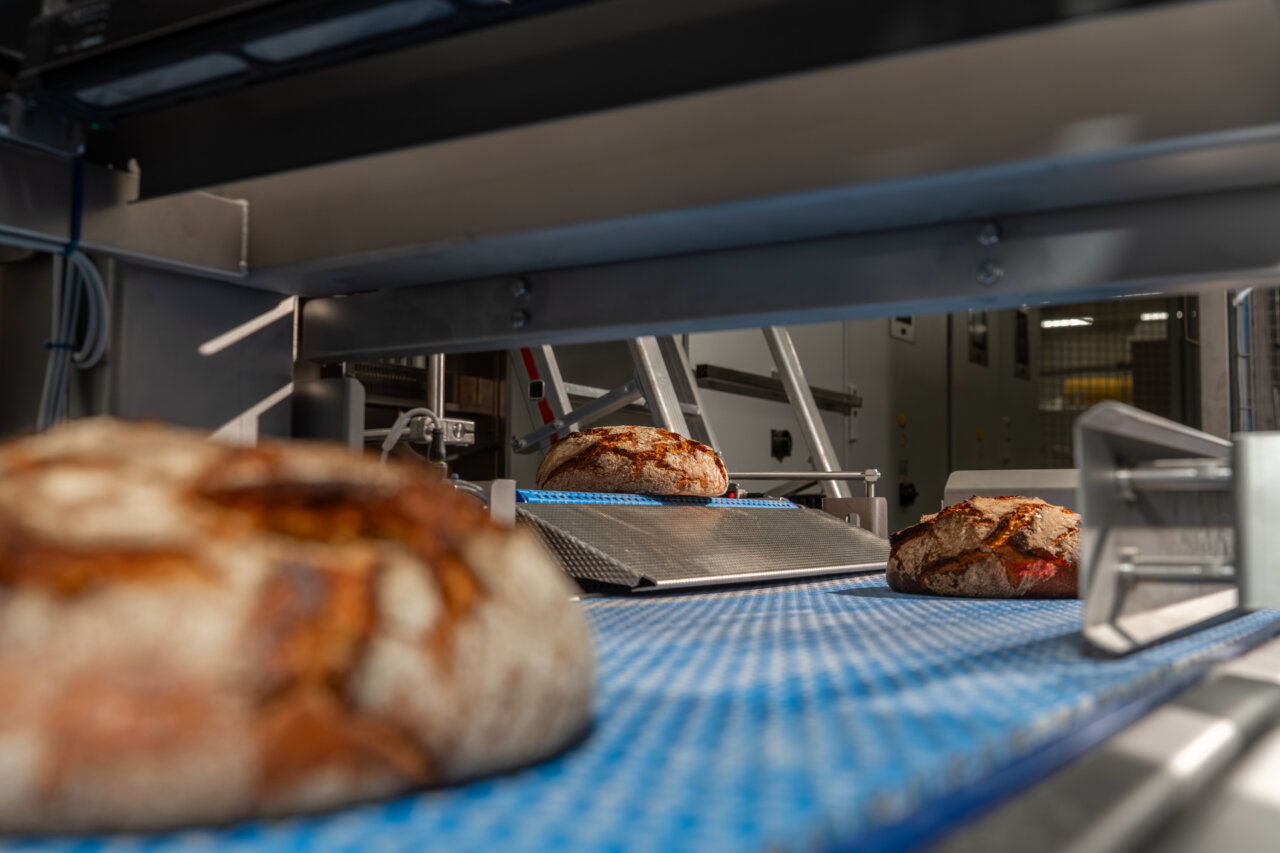
Position detected. Quality inspected with AI.
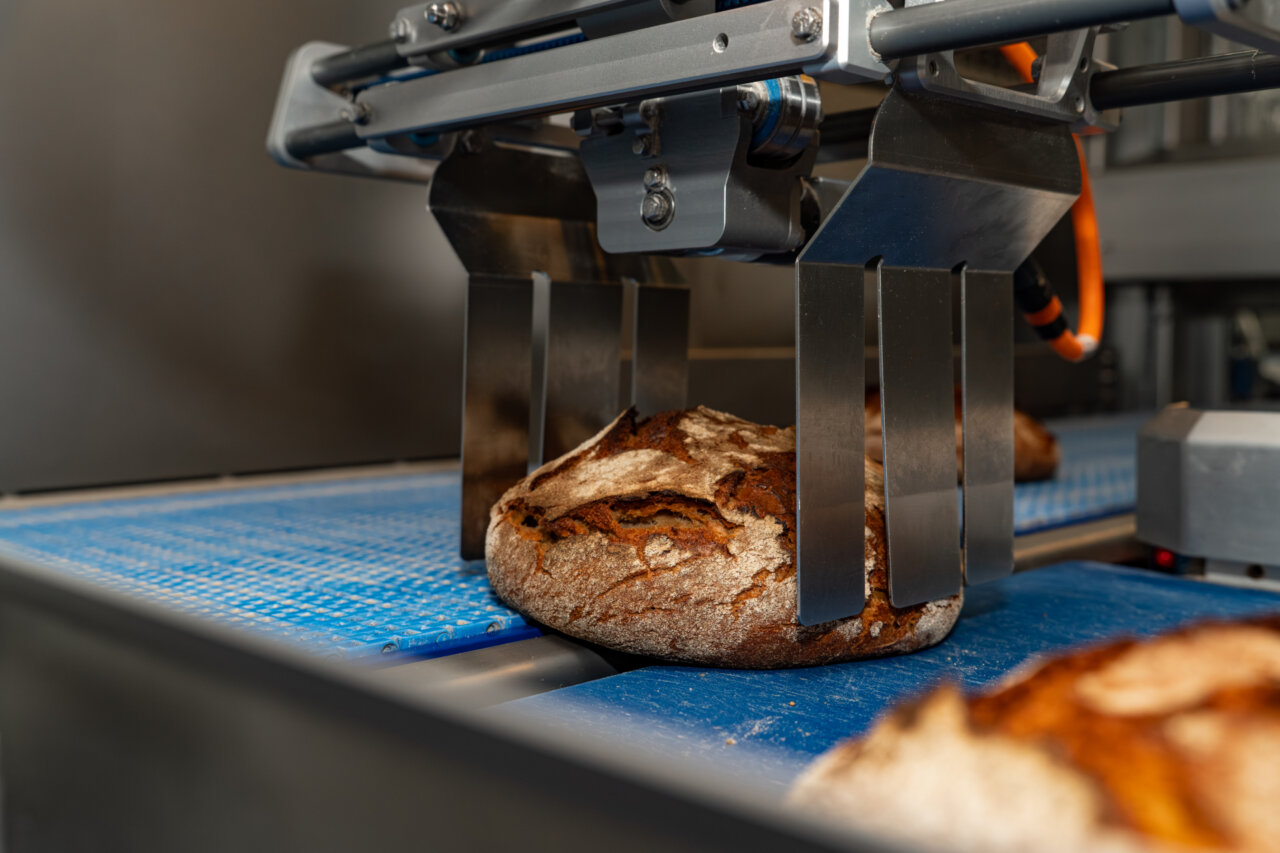
Different bread shapes. Safely handled.
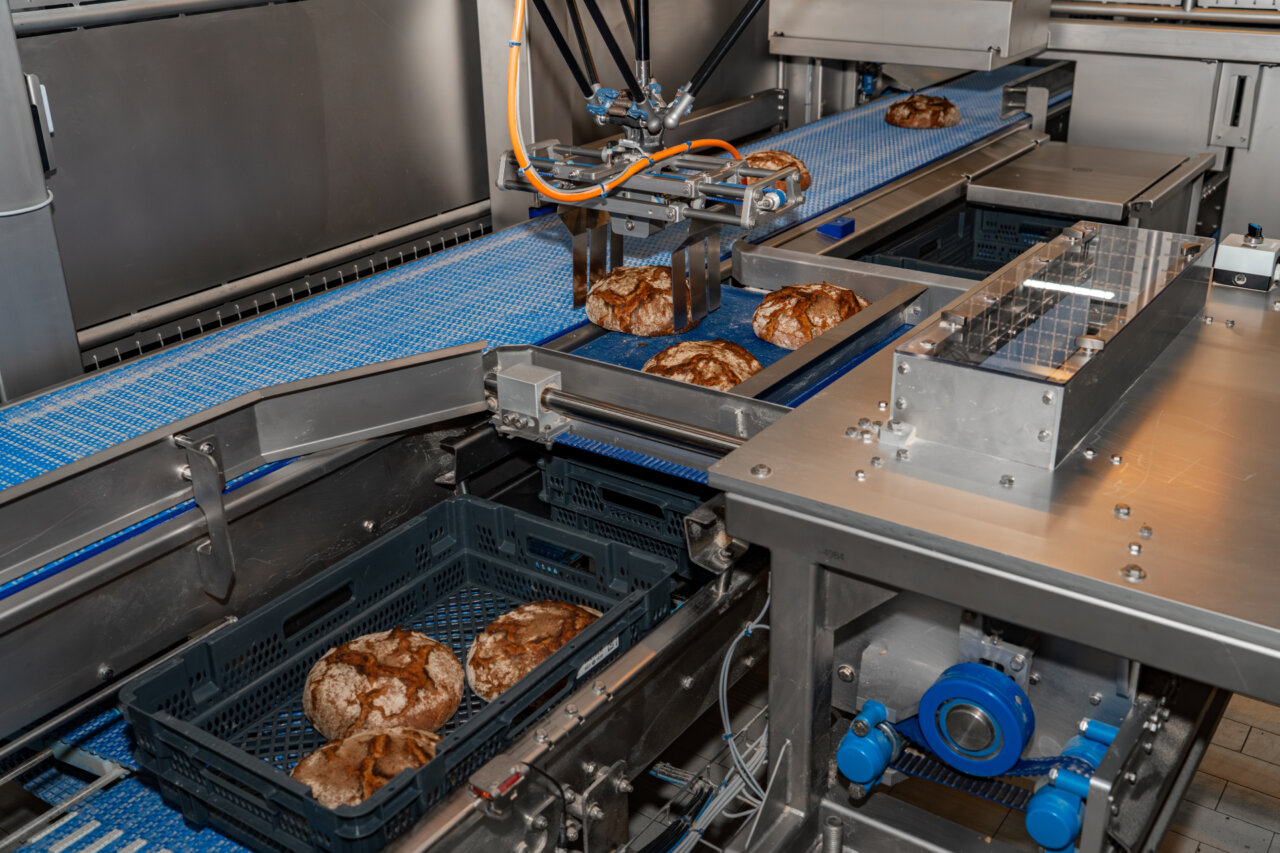
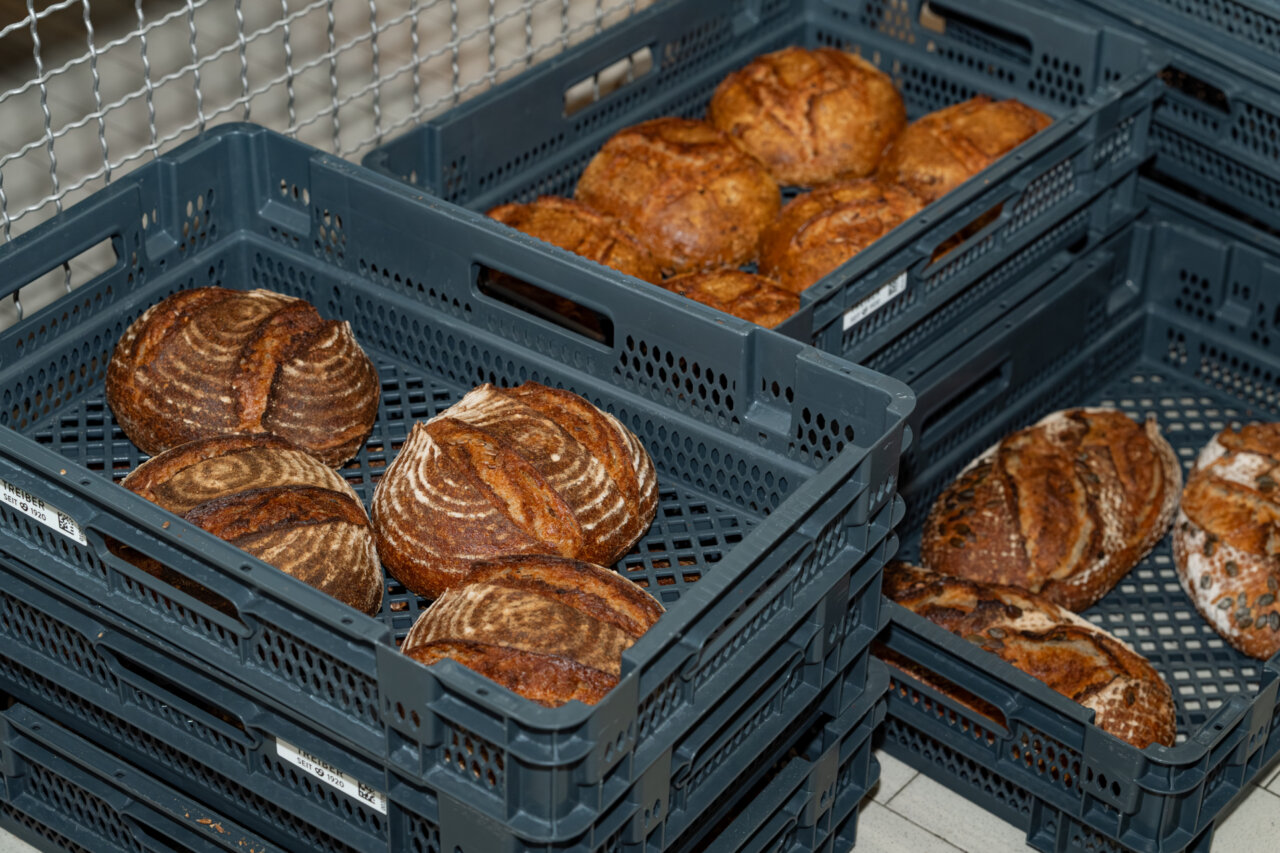
Packed by product type and ready for the next step
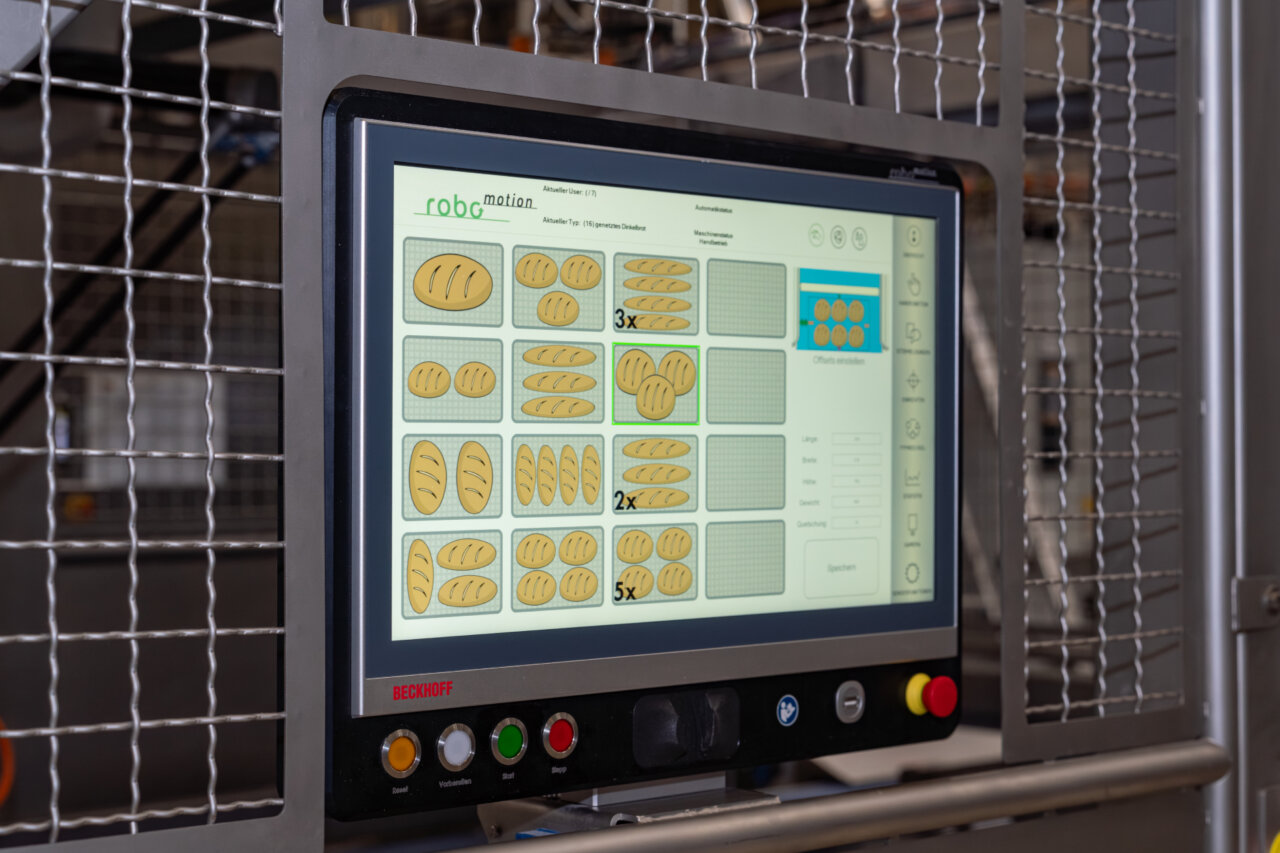
Packing patterns configured for each bread type
The right packing pattern for every type of bread
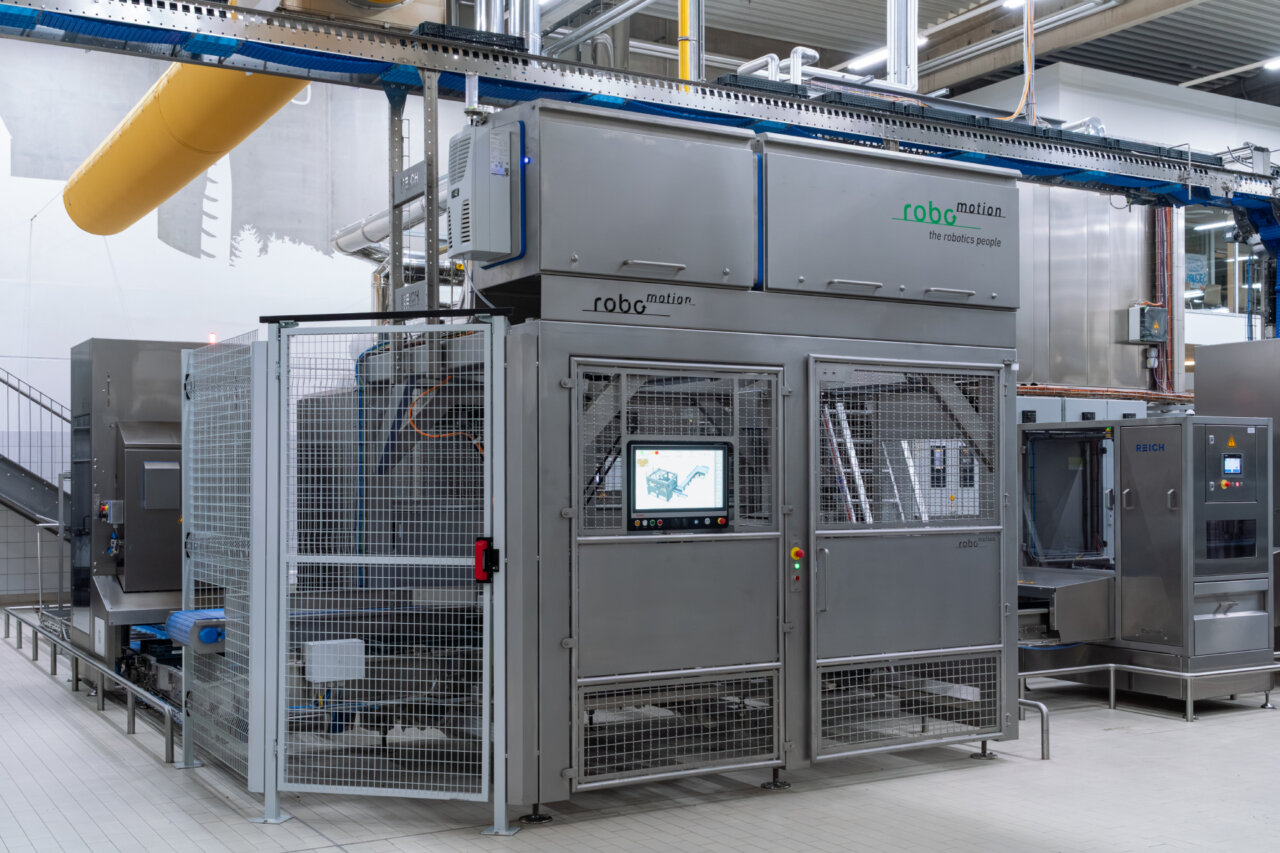
bakersloop: compact automation for bakery production
The challenge
Heavy, repetitive work and limited staff resources
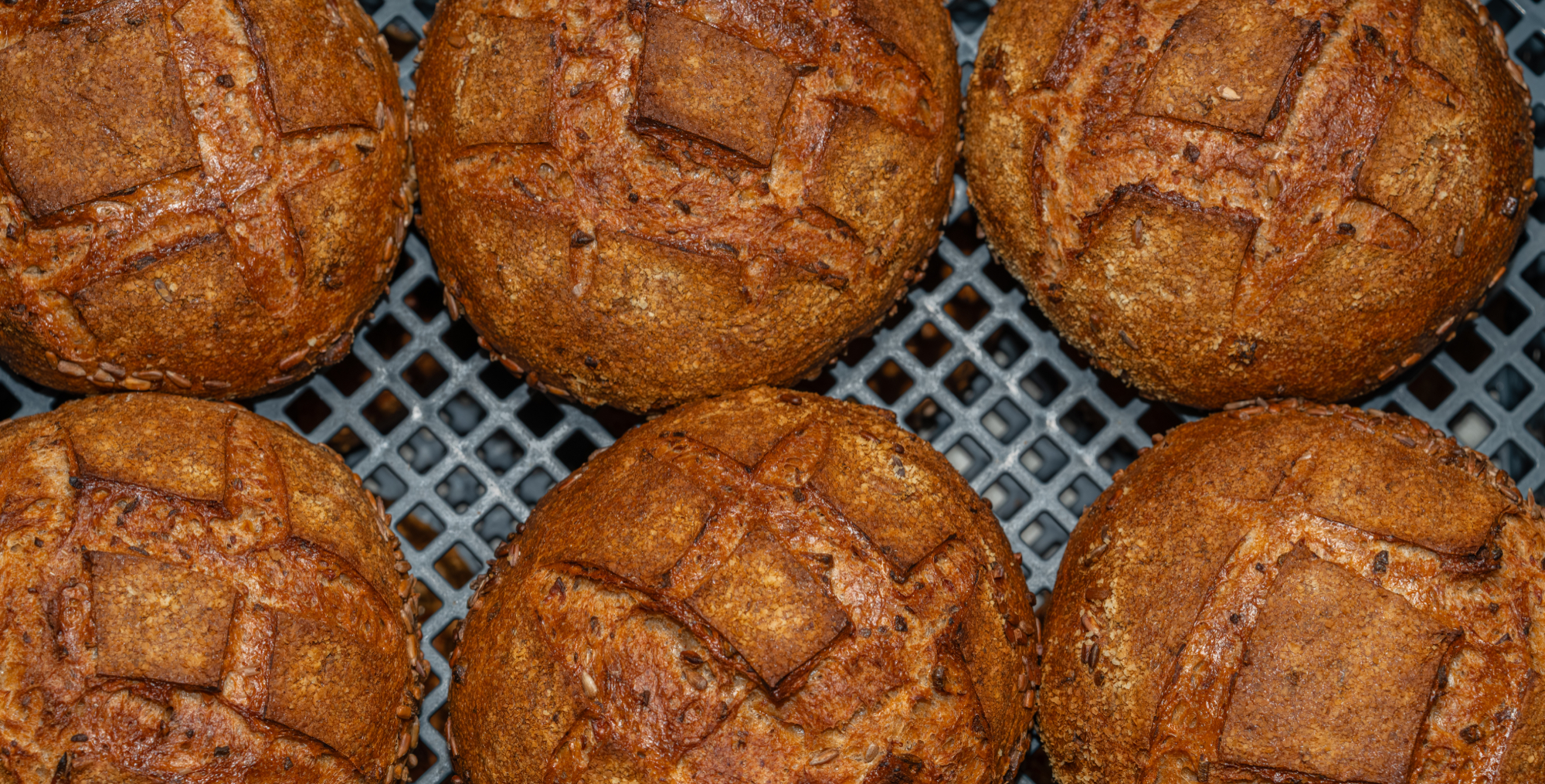
Every day, thousands of loaves in a wide range of varieties, shapes and sizes leave the oven. Due to the artisanal production process, breads of the same variety naturally differ slightly in shape, size, browning and surface characteristics. Handling this natural variation was one of the key challenges for automation.
Until now, packing the bread into baskets was entirely manual: picking up, inspecting, sorting and packing the bread, stacking and moving full baskets and providing empty ones. Hour after hour, at the pace of production and under considerable physical strain. At the same time, this demanding work ties up employees who are needed elsewhere in the bakery.
For Treiber, one thing was clear: this needed to change. The question was how.
This placed high demands on the new system. Bread varieties differ considerably in shape, size and packing pattern. From baguettes to round and rectangular loaves, the system needed to handle different product formats automatically and adjust the gripper accordingly without manual intervention.
Space was another challenge. The new system had to be compactly integrated into the existing line layout.
Natural variations also occur within each bread variety. Individual loaves may differ slightly in length, volume, browning, surface and crust. What is an acceptable natural variation and what is a quality defect? Distinguishing between the two reliably and in real time is where conventional image processing reaches its limits. This is where AI comes in.
The solution
Automated bread packaging for retail bakeries, integrated into the existing line
For Bäckerei Treiber, robomotion automated the process of inspecting, handling and packing freshly baked bread into bakery baskets directly after the oven.
robomotion developed a compact robotic cell that connects directly to the existing oven line. The bread conveyor from the oven was designed and installed by robomotion. In addition, the basket conveyor system supplied by Reich GmbH was integrated into the overall system. Together, these components form an automated solution that takes over the previously manual packing process and fits compactly into the existing production flow.
1. Detect and assess: the basis for the entire process
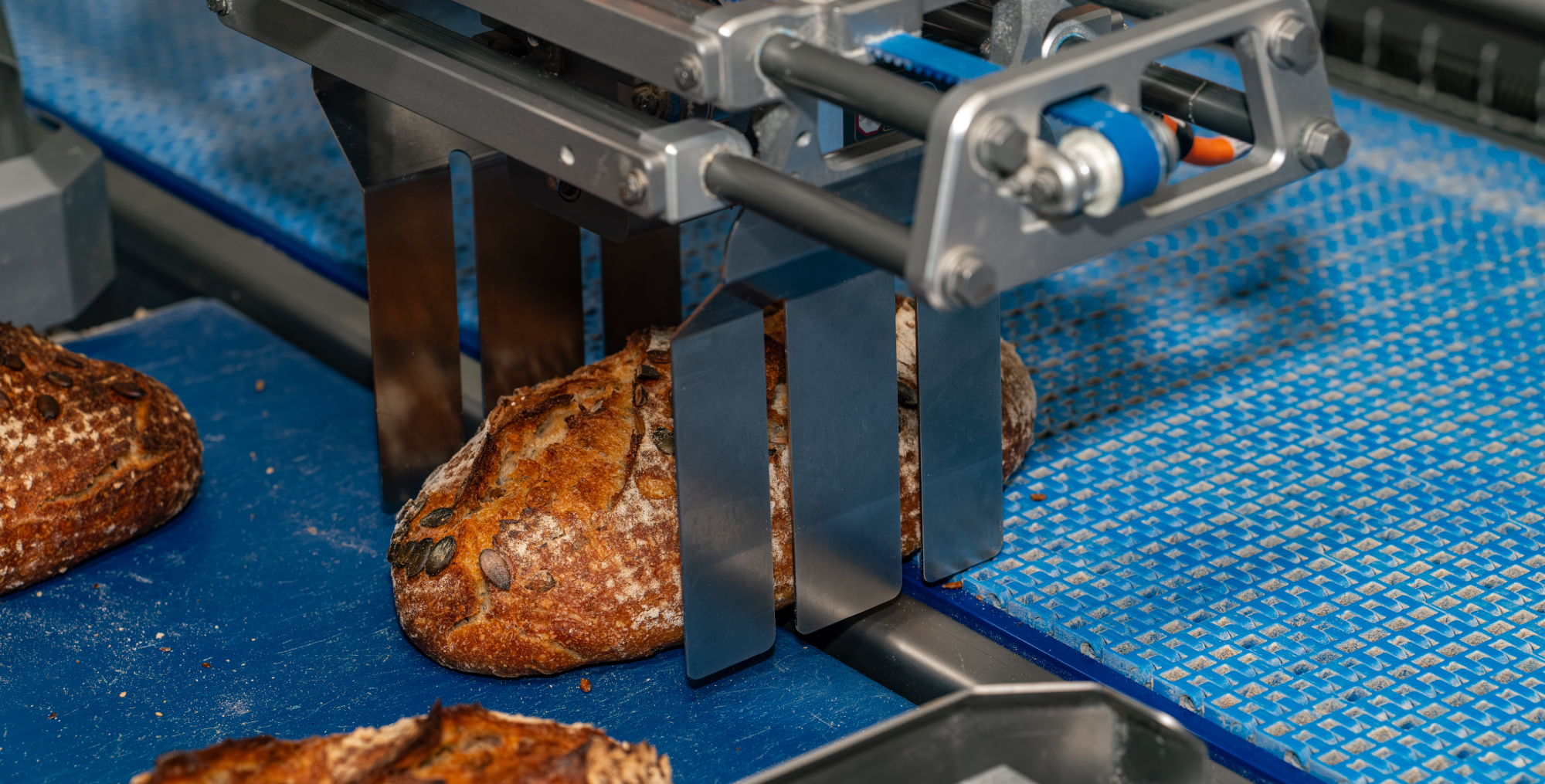
After leaving the oven, light sensors detect the position of the bread. At the same time, a camera with AI-based image evaluation inspects the quality of each loaf based on characteristics such as shape, surface and browning. Non-conforming products are reliably detected and rejected, while approved breads continue to the packing process.
The AI models were trained during the ramp-up phase using the specific bread varieties and corresponding examples of non-conforming products. This enables the system to distinguish natural variations in shape, surface and browning from actual quality defects.
2. Respond: automatic changeover for each bread variety
In parallel with quality inspection, the system receives information about the current bread variety directly from the oven. As soon as the product changes, the corresponding packing pattern is activated automatically.
At the same time, the bakery baskets are changed automatically and stacked by product type. This keeps the different bread varieties separated without the need for manual intervention.
3. Grip: hygienic and precise
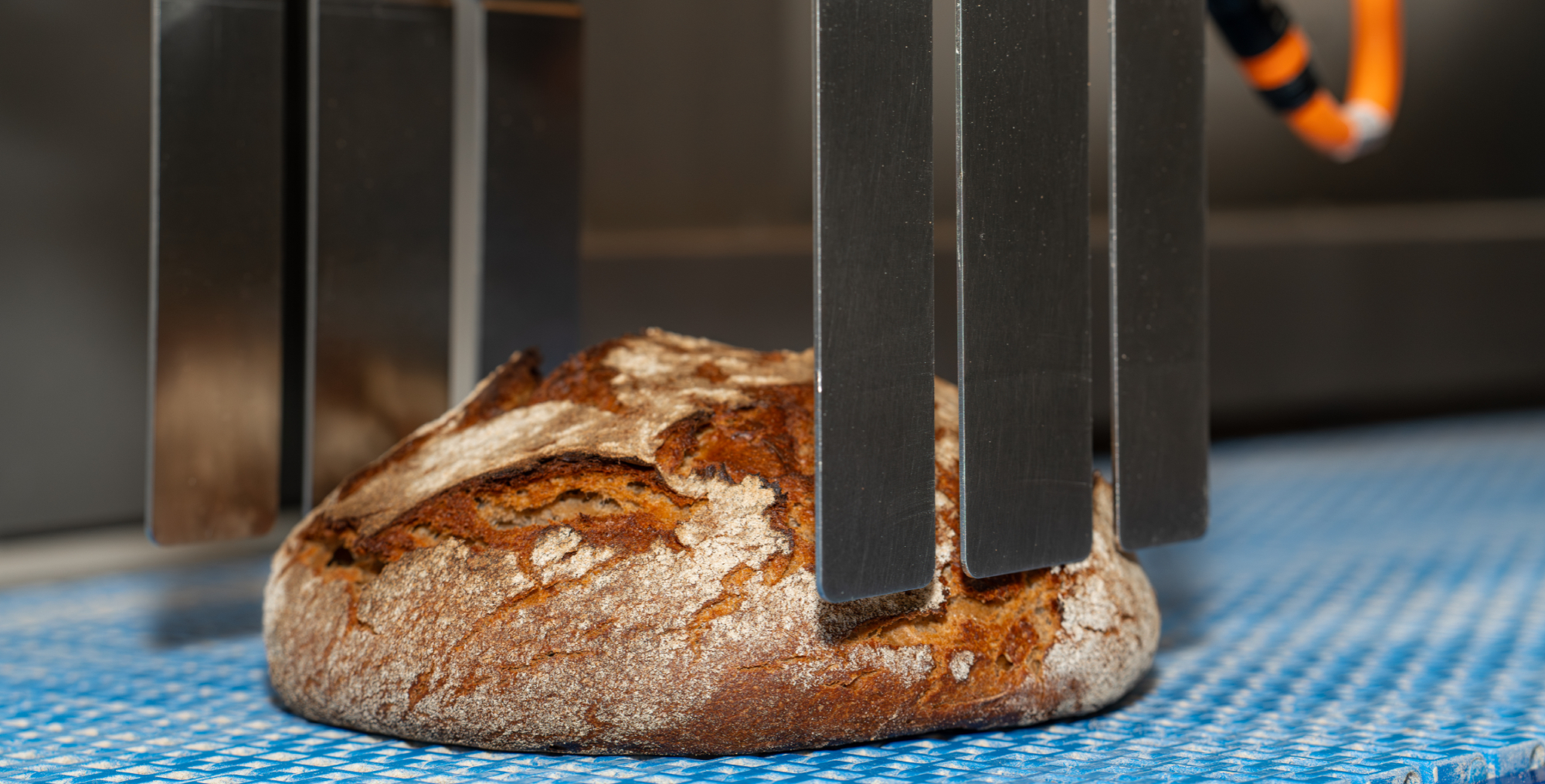
The specially developed servo gripper is made of stainless steel, designed according to Hygienic Design principles and suitable for direct food contact. It automatically adapts to different bread dimensions, providing gentle and reproducible handling.
4. Pack: reliable filling of bakery baskets
The breads are placed into the provided bakery baskets layer by layer according to the packing pattern for each product. Meanwhile, the integrated basket conveyor system automatically supplies empty baskets and transports full ones away, eliminating the need for manual basket handling.
For easy cleaning, the mobile conveyors can be moved into a separate cleaning area.
Fallback scenarios were considered as well. Bread has to leave the oven regardless of the system status. If necessary, simple changeover options allow operators to temporarily pack bread manually within the robotic cell. If the basket conveyor system is also unavailable, the bread can be removed directly from the oven conveyor. This ensures that production can remain operational even in exceptional situations.
The project at Bäckerei Treiber demonstrates how automated bread packaging can be integrated into the day-to-day operation of a retail bakery in a practical and economically viable way.
Looking for more examples? Discover further automation solutions for food production and packaging in our references.
And if you would like to see what comes out of Treiber’s ovens every day, visit the Bäckerei Treiber website.

